Sitios naturales sagrados: directrices para administradores de áreas protegidas

2008

The threatened species categories used in Red Data Books and Red Lists have been in place for almost 30 years. The IUCN Red List Categories and Criteria provide an easily and widely understood system for classifying species at high risk of global extinction, so as to focus attention on conservation measures designed to protect them.
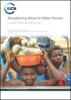
The Strengthening Voices for Better Choices (SVBC) project is currently operating in six tropical forest countries (Brazil, Ghana, Democratic Republic of Congo, Tanzania, Sri Lanka and Viet Nam). To allow key stakeholders to acquire the skills and knowledge that will allow them to participate more effectively in the development and implementation of new and improved forest governance arrangements, a capacity needs assessment (CNA) process for the six national components of SVBC was designed.
Contracts relating to scientific/technical development are effective only where they are enforceable or valid under relevant law, can be practically implemented by the Parties, and address matters arising from the relevant scientific/technical issues and practices.
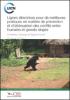
Un des défis auxquels la conservation des grands singes doit faire face est linteraction croissante entre les humains et les grands singes, et les conflits que cela génère. Il est impératif de développer une compréhension détaillée des situations de conflit actuelles et potentielles et leurs impacts présents et futurs à la fois sur les grands singes et les humains.
Re-introduction is one tool for conserving great apes and their natural habitats. These guidelines adapt other IUCN documents to pertain specifically to the re-introduction of great apes.

Les menaces conjuguées auxquelles font actuellement face les derniers grands singes appellent des mesures de conservation immédiates à tous les niveaux -- des initiatives portant sur des sites particuliers aux conventions et plans d'action internationaux, en passant par les stratégies nationales et régionales.
For billions of people throughout the world especially the poorest wetlands are critical for livelihoods. Wetlands are also home to an enormous diversity of wildlife, much of it unique to freshwater habitats. Traditional separate biodiversity and livelihood assessment and economic valuation fails to present the full value of a wetland in the face of alternative wetland uses, and as a result wetlands are lost through development activities.